On the shelf, the question of which magnesium is best for sleep starts with a misleading number. One trial capsule held 893 mg of magnesium bisglycinate, yet only 125 mg of it was magnesium. Each sleep trial here tested one form against placebo, so none has shown more than another, and magnesium itself did little, and unevenly. On average, older adults with insomnia fell asleep about 17 minutes faster than on placebo, and bisglycinate trimmed an insomnia score slightly more than placebo did.
Key takeaways
1. Which magnesium is best for sleep is an open question: a 2026 review of 12 trials rated the evidence low to very low. One meta-analysis pooled 17 minutes faster sleep onset, from 2 trials in older adults with insomnia.
2. Form: each trial here tested one form against placebo. Oxide, citrate, bisglycinate and threonate trials gave mixed results.
3. Dose: the bisglycinate, citrate and oxide trials used 250 to 500 mg of magnesium a day. The US limit from supplements is 350 mg; Germany's is 250 mg.
4. Food first: 28 g of pumpkin seeds hold 156 mg, more than one trial capsule. With kidney disease or some medicines, ask first.
Does magnesium help you sleep? What the trials found
A little, for some people, on weak evidence. A 2026 review of 12 trials rated the certainty low to very low and does not support magnesium as a routine insomnia treatment. In older adults with insomnia, it shortened the time to fall asleep by 17.36 minutes more than placebo, as a pooled mean; total sleep did not change significantly.
The bisglycinate trial: 155 adults aged 18 to 65 who slept poorly, placebo group included, 250 mg of magnesium a day for four weeks. On magnesium, the insomnia score fell 3.9 points against 2.3 on placebo, a small effect (Cohen's d = 0.2). The Insomnia Severity Index is a short questionnaire on falling and staying asleep; lower means fewer symptoms.
And the 17 minutes? A meta-analysis found 3 trials with 151 older adults, but the sleep-onset figure pooled 2 trials with 55 people. Every trial had a moderate to high risk of bias.
| Outcome | Minutes against placebo | Note |
|---|---|---|
| Faster sleep onset | 17.36 min | 2 trials, 55 people |
| Longer total sleep | 16.06 min | not significant |
In just 12 healthy adults aged 60 to 80, a sleep EEG showed more slow-wave sleep after 20 days of magnesium than on placebo. Background: what slow-wave sleep is and how much deep sleep is normal.
Why the reputation? Observational studies tie magnesium status to better sleep, while the trials point in different directions.
Who might notice a difference
Mostly people who eat little magnesium, and that is a hint, not proof. In the bisglycinate trial, exploratory analyses suggested larger gains with low magnesium intake from food. The positive trial in older adults only took people eating at most 75 percent of the recommended amount.
Low intake is not deficiency. In US survey data, 48 percent took in less from food than their average requirement, yet healthy kidneys limit losses, so symptoms are uncommon. German reference values call deficiency rare with usual eating habits. Early signs include poor appetite, nausea, fatigue, later cramps or heart rhythm problems. Gut diseases, type 2 diabetes, alcohol dependence and older age make falling short more likely. A blood test settles little: less than 1 percent of body magnesium is in the serum.
More magnesium, longer sleep? In 3,964 US adults, the top intake quarter was less likely to sleep under 7 hours than the bottom one (odds ratio 0.64), an association only. For night-time leg cramps in older adults, a Cochrane review found a meaningful benefit unlikely. Restless legs: a 2019 review had one small randomized trial, not significant, a 2024 review improvements with magnesium oxide, with high risk of bias in half its studies.
Which magnesium is best for sleep: glycinate, citrate, oxide or threonate?
None has beaten another for sleep, because each trial here tested one form against placebo. Oxide improved several sleep measures in older adults with insomnia, citrate did no better than placebo, and bisglycinate had a small effect. The threonate results come from two supplier-funded trials: one found better scores on a sleep ring, the other no significant ring differences.
| Form | Per day | Who, how long | Against placebo |
|---|---|---|---|
| Oxide | 500 mg magnesium | 46 people aged 60 to 75 with insomnia, 8 weeks | Insomnia score, sleep efficiency and time to fall asleep better; total sleep time not significant |
| Citrate | 320 mg magnesium | 100 adults aged 51 to 85 with poor sleep, 7 weeks | No better than placebo; sleep scores improved in both groups |
| Bisglycinate | 250 mg magnesium | 155 adults aged 18 to 65 with poor sleep, 4 weeks | Insomnia score down 3.9 against 2.3 points, a small effect |
| L-threonate | 1 g of the compound | 80 adults aged 35 to 55 with sleep problems, 21 days; supplier-funded | A sleep ring's deep-sleep and REM scores better |
| L-threonate | 2 g of the compound | 100 adults aged 18 to 45 unhappy with their sleep, 6 weeks; supplier-funded | One self-report score better; sleep ring data no significant group difference |
| Effervescent tablets | Up to 30 mmol | 12 healthy people aged 60 to 80, 20 days, sleep EEG | Slow-wave sleep 16.5 against 10.1 minutes |
Glycinate brings glycine along: two trial capsules held 1,523 mg of glycine a day, roughly half the 3 g used when glycine itself was studied. At 3 g, glycine eased next-day fatigue in healthy volunteers kept short of sleep. Whether half that helps is untested.
In a trial with 46 healthy adults, citrate and an amino-acid chelate were absorbed better than oxide, and the US fact sheet says forms that dissolve well absorb more completely. Yet oxide was the form in the positive older-adult trial.
In a trial with 43 long-term care residents with insomnia, mean age 78, magnesium with melatonin and zinc improved sleep scores; which part worked is unknown. For sprays and baths, a review found the skin route scientifically unsupported. Anxiety? The bisglycinate trial found no significant differences in its other psychological scores.
How much magnesium for sleep, and morning or evening?
The bisglycinate, citrate and oxide trials used 250 to 500 mg of magnesium a day; read the elemental magnesium, not the compound on the front. The US upper limit is 350 mg a day from supplements, and Germany's risk assessors advise at most 250 mg, split into two or more doses. Neither limit counts magnesium from food.
How much magnesium glycinate for sleep? The bisglycinate trial used 250 mg of magnesium a day, the German maximum and under the US 350 mg.
Reading the label: 893 mg of bisglycinate held 125 mg of magnesium, about 14 percent. The oxide tablet packed 250 mg into 414 mg, about 60 percent, and the oxide trial's 500 mg a day sat above both limits.
Morning or evening? The bisglycinate trial gave its capsules 30 to 60 minutes before bed, the oxide trial twice a day, so two doses with one in the evening stays close to what was tested. None of these trials compared timings. Every night? That is how the trials ran, daily for 3 to 8 weeks.
Side effects, kidneys and medicines: who should check first
Diarrhea is the usual side effect, mostly above the limits and with oxide, carbonate, chloride or gluconate. With healthy kidneys it settles within a day or two. Kidney disease changes that, since impaired kidneys clear less of the excess. Some medicines need hours apart from it, and long use of some diuretics or acid blockers can lower magnesium levels.
In cramp trials, 11 to 37 percent reported gut complaints on magnesium, against 10 to 14 percent on control.
Bisphosphonates for osteoporosis need at least 2 hours apart; take tetracycline or quinolone antibiotics at least 2 hours before magnesium or 4 to 6 hours after. Another medicine? Ask your pharmacist. For chronic insomnia, the European guideline puts cognitive behavioral therapy first.
What a day of food already brings
A plate can match a capsule. Roasted pumpkin seeds hold 156 mg per 28 g, more than one 125 mg trial capsule. A sample day reaches 391 mg, above the German reference values of 350 mg for men, 300 for women, and food alone does not give healthy people too much.
| Food or capsule | Magnesium, mg | Note |
|---|---|---|
| Pumpkin seeds, roasted, 28 g | 156 | |
| Almonds, roasted, 28 g | 80 | |
| Spinach, boiled, half a cup | 78 | |
| Cashews, roasted, 28 g | 74 | |
| Black beans, cooked, half a cup | 60 | |
| Brown rice, cooked, half a cup | 42 | |
| Banana, medium | 32 | |
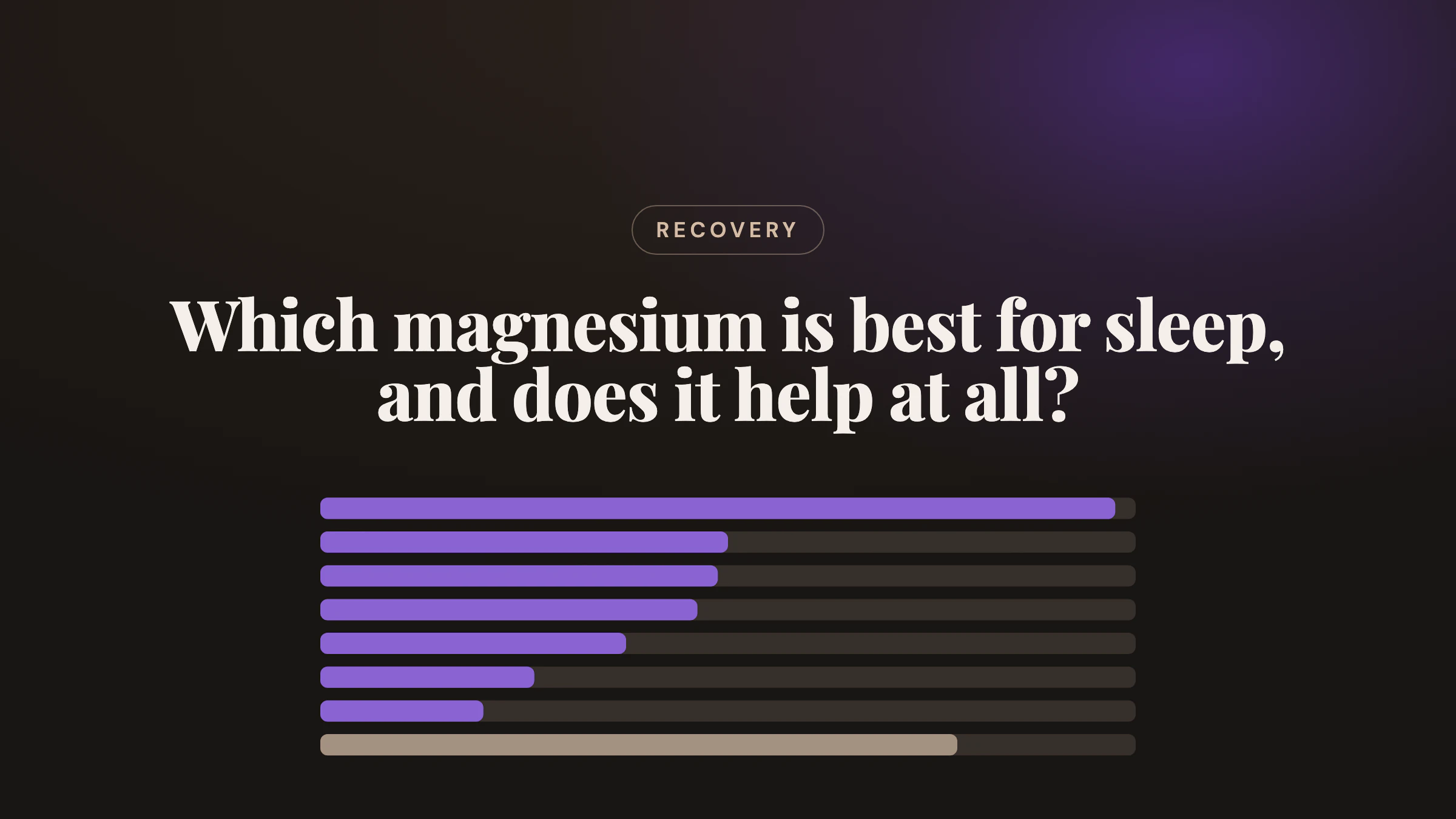
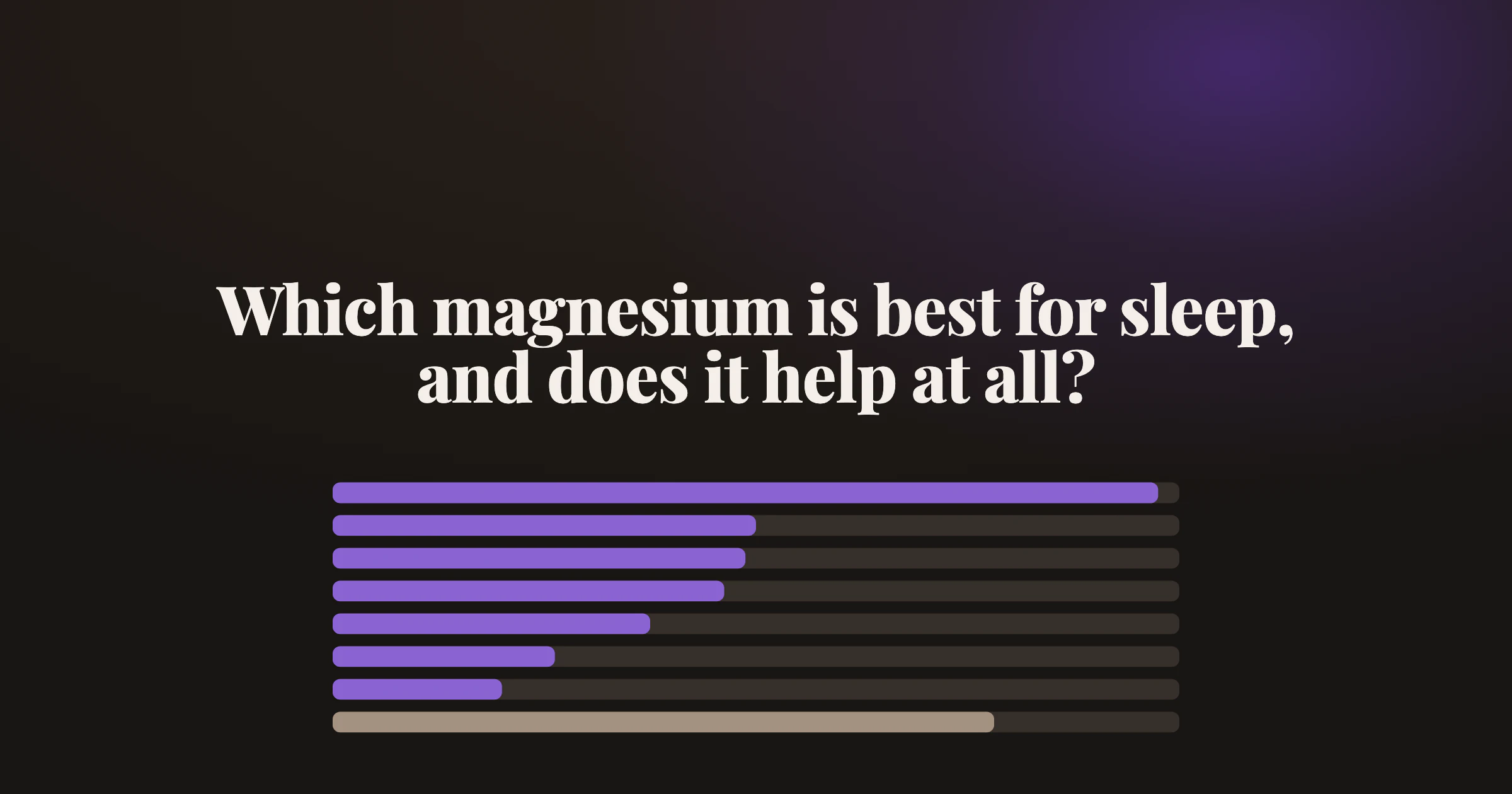
| One trial capsule (bisglycinate) | 125 | for comparison |
That day, in US servings:
- 28 g (1 ounce) roasted pumpkin seeds: 156 mg
- half a cup of boiled spinach: 78 mg
- half a cup of cooked black beans: 60 mg
- half a cup of cooked brown rice: 42 mg
- a medium banana: 32 mg
- a slice of whole wheat bread: 23 mg
Swap in 28 g of almonds (80 mg) or cashews (74 mg). Older adults do absorb less from the gut. To keep track, your huuman Coach logs a meal from a photo or a sentence.
So the first change is a plate, not a capsule. To start without a supplement, see the habits that moved deep sleep in studies.
If you try one anyway: one product within the limits, for about four weeks. Rate how fast you fall asleep and how rested you feel from 0 to 10, before and after; stop if nothing changes or your stomach objects. A change alone proves little: in the citrate trial with 100 adults aged 51 to 85, the whole group's sleep score improved from 10.4 to 6.6 points, yet magnesium did no better than placebo.
More health topics to explore
References
- Schuster J et al. — Magnesium Bisglycinate Supplementation in Healthy Adults Reporting Poor... (2025)
- Mah J et al. — Oral magnesium supplementation for insomnia in older adults: a Systematic... (2021)
- Lopresti AL et al. — Magnesium Supplementation for Sleep in Adults: A Systematic Review of... (2026)
- Held K et al. — Oral Mg(2+) supplementation reverses age-related neuroendocrine and sleep... (2002)
- Arab A et al. — The Role of Magnesium in Sleep Health: a Systematic Review of Available... (2023)
- Deutsche Gesellschaft für Ernährung (DGE) — Referenzwert Magnesium (2021)
- NIH Office of Dietary Supplements — Magnesium: Fact Sheet for Health Professionals (2026)
- Zhang Y et al. — Association of magnesium intake with sleep duration and sleep quality:... (2022)
- Garrison SR et al. — Magnesium for skeletal muscle cramps (2020)
- Marshall NS et al. — Magnesium supplementation for the treatment of restless legs syndrome and... (2019)
- González-Parejo P et al. — Effects of Dietary Supplementation in Patients with Restless Legs Syndrome:... (2024)
- Abbasi B et al. — The effect of magnesium supplementation on primary insomnia in elderly: A... (2012)
- Hausenblas HA et al. — Magnesium-L-threonate improves sleep quality and daytime functioning in... (2024)
- Lopresti AL et al. — The effects of magnesium L-threonate (Magtein(®)) on cognitive performance... (2025)
- Bannai M et al. — The effects of glycine on subjective daytime performance in partially... (2012)
- Walker AF et al. — Mg citrate found more bioavailable than other Mg preparations in a... (2003)
- Rondanelli M et al. — The effect of melatonin, magnesium, and zinc on primary insomnia in... (2011)
- Gröber U et al. — Myth or Reality-Transdermal Magnesium? (2017)
- Bundesinstitut für Risikobewertung (BfR) — BfR bewertet Tageshöchstmenge für Magnesium in Nahrungsergänzungsmitteln (2017)
- Riemann D et al. — The European Insomnia Guideline: An update on the diagnosis and treatment of... (2023)
- Nielsen FH et al. — Magnesium supplementation improves indicators of low magnesium status and... (2010)
About this article · Written by the huuman Team. Our content is based on peer-reviewed research and clinical guidelines. We follow editorial standards grounded in scientific evidence.
This article is for educational purposes only and does not constitute medical advice. Health and training decisions should be discussed with qualified professionals.