Can you lose fat and gain muscle at the same time? Yes, after 40 too, if you lift; the process is called body recomposition. In a study of 304 adults eating about 500 kcal a day below their needs, the men who lifted lost 8.9 kg of fat and gained 0.8 kg of fat-free mass, while the men who did no exercise lost 5.8 kg of fat and 2.8 kg of fat-free mass; participants averaged about 40 and chose their own exercise. In randomized trials of older adults with obesity, adding lifting to a diet prevented 93.5 percent of the lean-mass loss.
Key takeaways
1. It works if you lift. On the same diet, people who lifted lost more fat than weight and gained fat-free mass; in randomized trials, lifting prevented most diet-induced lean loss.
2. Keep the deficit modest. About 500 kcal a day stopped lean-mass gains on average, so aim for 300 to 500.
3. Eat 1.2 to 1.6 g of protein per kg a day. That is 90 to 120 g at 75 kg.
4. Sleep counts. Short sleep on the same diet shifted the loss from fat to fat-free mass.
5. Judge it by waist and strength. The waist tracked fat loss; a bathroom body-fat scale missed by about 5 percentage points.
This guide is for anyone who wants to lose fat without giving up muscle, from first-timers to people coming back. It shows how to gain muscle and lose fat at the same time, with a 12-week plan.
Quick answer
Can you lose fat and gain muscle at the same time? Yes. The short version:
- Lift: men who lifted lost more fat than weight and gained 0.8 kg of fat-free mass.
- Deficit: 300 to 500 kcal a day below your needs; about 500 stopped lean gains on average.
- Protein: 1.2 to 1.6 g per kg a day, 90 to 120 g at 75 kg.
- Sleep: in a two-week trial, 5.5 instead of 8.5 hours in bed cut the fat lost from 1.4 to 0.6 kg.
- Measure: waist and lifts, not a bathroom body-fat scale.
- Pace: about 40 g of fat-free mass a week; first changes after about 8 to 12 weeks.
How to lose fat and gain muscle at the same time
To lose fat and gain muscle at the same time, lift, eat a little less than you burn and get enough protein. In a review of 114 randomized trials in people with overweight or obesity, lifting with calorie restriction cut 5.3 kg of fat against no intervention while lean mass held, and lifting alone cut 1.0 kg of fat and added 0.8 kg of lean mass, across age and sex groups.
In lean, trained athletes in a deficit, most groups lost fat-free mass; the groups that kept it mostly had more body fat, a smaller deficit or a new training stimulus, which beginners and people returning to training have. A big fat reserve is not required: among 99 women with a mean age of 68.6, the third with the least fat mass at the start showed the most recomposition after 24 weeks of lifting.
Lean mass can rise even in a steep deficit: young men about 40 percent below their needs for 4 weeks, training 6 days a week on 2.4 g of protein per kg, gained 1.2 kg of lean mass and lost 4.8 kg of fat. Proof that it can happen, not a plan.
Why the scale barely moves
Because the scale adds two changes together: fat lost and lean mass gained. In a study of 304 adults on the same kind of diet, the lifters lost more fat than weight: 1.1 kg of fat per kilogram of weight lost, against 0.86 with aerobic exercise and 0.7 without. Twelve adults aged 56 to 80 whose diet held their weight steady lost 1.8 kg of fat and gained 1.4 kg of fat-free mass in 12 weeks of lifting.
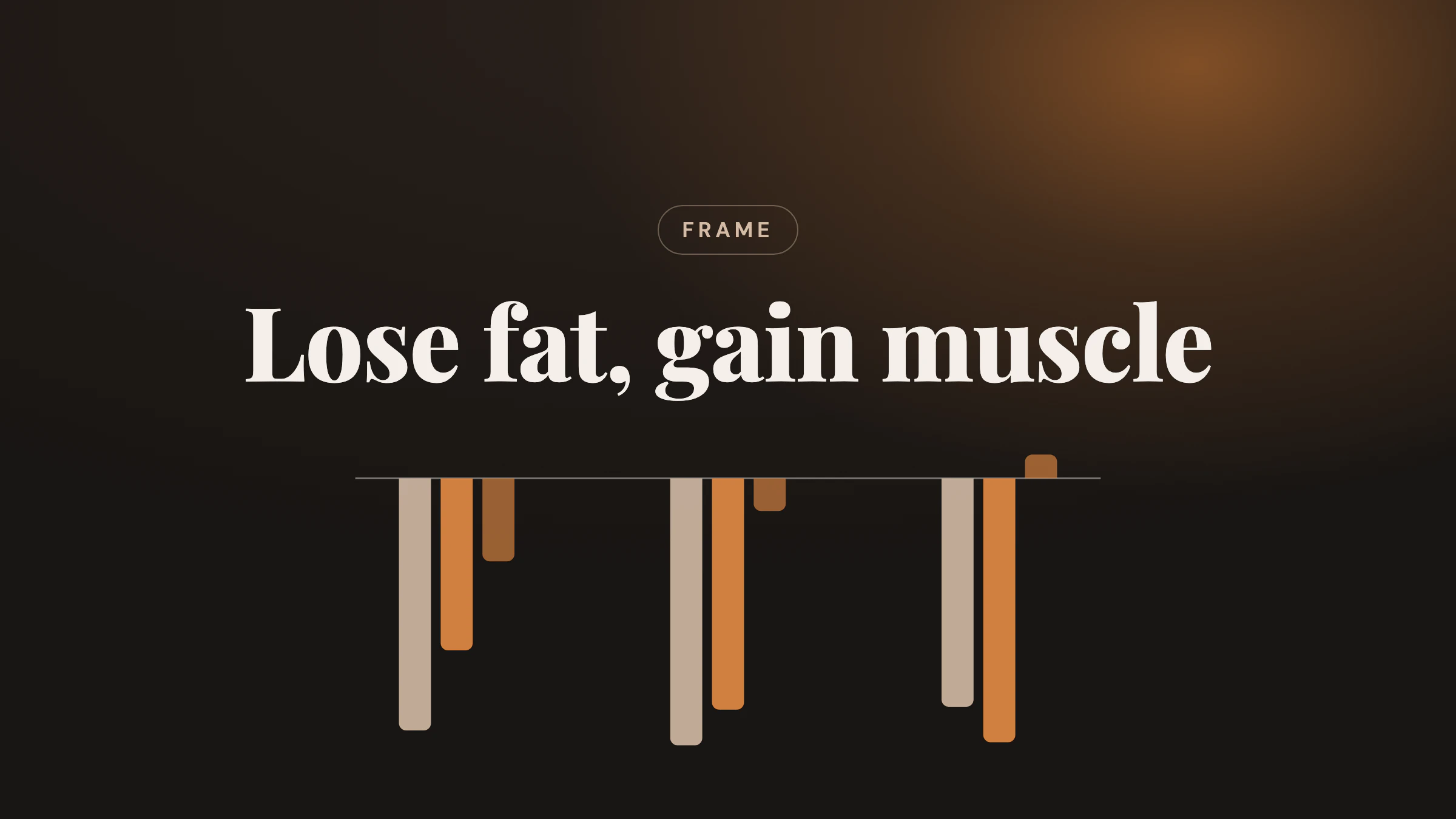
The whole study: 304 adults aged 20 to 74 ate about 500 kcal a day below their needs for an average of 5.1 months. Among the men (mean age 41), those who did no exercise lost 8.5 kg of weight, 5.8 kg of fat and 2.8 kg of fat-free mass; the aerobic group lost 9.0, 7.8 and 1.1 kg; the lifters lost 7.7 kg of weight and 8.9 kg of fat and gained 0.8 kg of fat-free mass. Women who lifted lost 5.42 kg of weight and 6.36 kg of fat and gained 0.90 kg. Everyone chose their own exercise, so this is an association, not proof.
| Group | Body weight | Fat | Fat-free mass |
|---|---|---|---|
| No exercise | −8.5 kg | −5.8 kg | −2.8 kg |
| Aerobic exercise | −9.0 kg | −7.8 kg | −1.1 kg |
| Resistance training | −7.7 kg | −8.9 kg | +0.8 kg |
Muscle does not weigh more than fat: a kilogram is a kilogram, and the scale just adds what went and what grew.
Lifting decides what you lose
To lose weight without losing much muscle, lift: it changes what the lost kilos are made of. In a randomized trial of 160 older adults with obesity, where every exercise group lost about 9 percent of its weight, lean mass fell only 2 percent with lifting against 5 percent with aerobic training, and strength rose 19 percent against 4. Across six randomized trials, lifting three times a week prevented almost all diet-induced lean loss: 93.5 percent of it.
In an 18-month trial of 249 adults with obesity (mean age 66.9, 71 percent women), weight loss alone took off 4.8 kg of fat and 1.0 kg of lean mass, weight loss plus aerobic training 6.8 and 1.6 kg, and weight loss plus lifting 7.8 kg of fat and 0.8 kg of lean mass.
| Group | Fat | Lean mass |
|---|---|---|
| Weight loss alone | −4.8 kg | −1.0 kg |
| Plus aerobic training | −6.8 kg | −1.6 kg |
| Plus resistance training | −7.8 kg | −0.8 kg |
Keep the cardio and add lifting: over 8 months in 119 sedentary adults with overweight or obesity, aerobic training cut weight and fat more than lifting, but the programs with lifting added more lean mass. For strength, heavier loads, 2 to 3 sets and at least 2 sessions a week brought larger gains in an overview of 137 systematic reviews; the full weekly dose and a two-day plan are in our guide to building muscle after 40. Our guide to cardio before or after weights shows how to order both in one week.
How big should the calorie deficit be?
Keep the calorie deficit at about 300 to 500 kcal a day below your needs, or skip it if you are already lean. Across randomized trials, an energy deficit held back lean-mass gains from lifting, and about 500 kcal a day was enough to stop them on average, while strength gains were comparable; to keep lean mass while losing weight, the authors advise a deficit of 500 kcal or less.
The lifters in the 304-adult study still gained fat-free mass at about 500, so treat it as a guide, not a wall. By the classic rule of 3,500 kcal per pound, 500 kcal a day is 3,500 a week, about 0.45 kg (1 lb) a week. The rule roughly fits people with more than 30 kg of body fat; leaner people lose weight faster on the same deficit. By that rule, the common promise of 1 to 2 pounds a week on 300 to 500 kcal a day does not add up.
Estimate your needs with our TDEE calculator and set the gap with the calorie deficit calculator.
How much protein while losing fat?
Aim for 1.2 to 1.6 g of protein per kg of body weight a day: 90 to 120 g at 75 kg (165 lb). The PROT-AGE expert group advises 1.2 g per kg or more for people over 65 who exercise, and in a review of 49 training trials, fat-free mass gains plateaued at about 1.6 g per kg. In 20 weight-loss trials in adults over 50, higher-protein diets kept more lean mass and lost more fat.
Across 24 trials of reduced-calorie diets, high-protein diets kept 0.43 kg more fat-free mass and lost 0.87 kg more fat than standard-protein diets. In 80 adults with obesity (mean age 63) eating 600 kcal a day less and lifting three times a week, the group given extra protein gained 0.4 kg of arm and leg muscle while the control group lost 0.5 kg; the supplement (whey protein with leucine and vitamin D) raised that group's total protein to 1.11 g per kg, against 0.85 g.
| What | Per kg of body weight a day | At 75 kg | Study |
|---|---|---|---|
| At least, for adults who exercise (PROT-AGE, over 65) | 1.2 g/kg | 90 g | Bauer et al. 2013 |
| Above this, no more fat-free gains in training trials | 1.6 g/kg | 120 g | Morton et al. 2018 |
The 2.3 to 3.1 g per kg quoted online is a range for lean athletes in a deficit, per kg of fat-free mass, not a target for most people losing fat. Our protein calculator turns your weight into a daily target, and our strength guide covers protein per meal after 40. In severe kidney disease (eGFR under 30), protein may need limiting: talk to your doctor first.
Sleep: the lever many plans leave out
Sleep changes what a diet takes. In a crossover trial, 10 overweight adults with a mean age of 41 followed the same calorie restriction for 14 days twice: with 5.5 instead of 8.5 hours in bed, they lost 0.6 kg of fat instead of 1.4 and 2.4 kg of fat-free mass instead of 1.5. The share of the loss that came from fat fell by 55 percent.
| Measure | 8.5 hours in bed | 5.5 hours in bed |
|---|---|---|
| Fat lost | 1.4 kg | 0.6 kg |
| Fat-free mass lost | 1.5 kg | 2.4 kg |
The trial was small and short, but an 8-week one agrees: on calorie restriction, adults with overweight or obesity who slept about an hour less on five nights a week lost a similar amount of weight, yet a smaller share of it as fat, and catch-up sleep may not fully make up for it. Plan a sleep window of at least 7 to 8 hours.
After 40 and through menopause
Body recomposition works for women and men after 40, including after menopause, but the scale hides more of it. In the US SWAN cohort, the rate of fat gain doubled at the start of the menopause transition and lean mass began to fall, while weight rose no faster than before; both shifts lasted until 2 years after the final menstrual period.
Training pushes the other way. In a 16-week trial of 96 postmenopausal women, functional and combined training raised lean mass from week 8 and cut body fat percentage from week 12 without changing body mass (measured by bioimpedance). Among 130 women with a mean age of 68.7 who lifted for 24 weeks, muscle mass rose 5.4 and 5.1 percent with moderate and higher usual protein intakes, against 2.3 percent with the lowest.
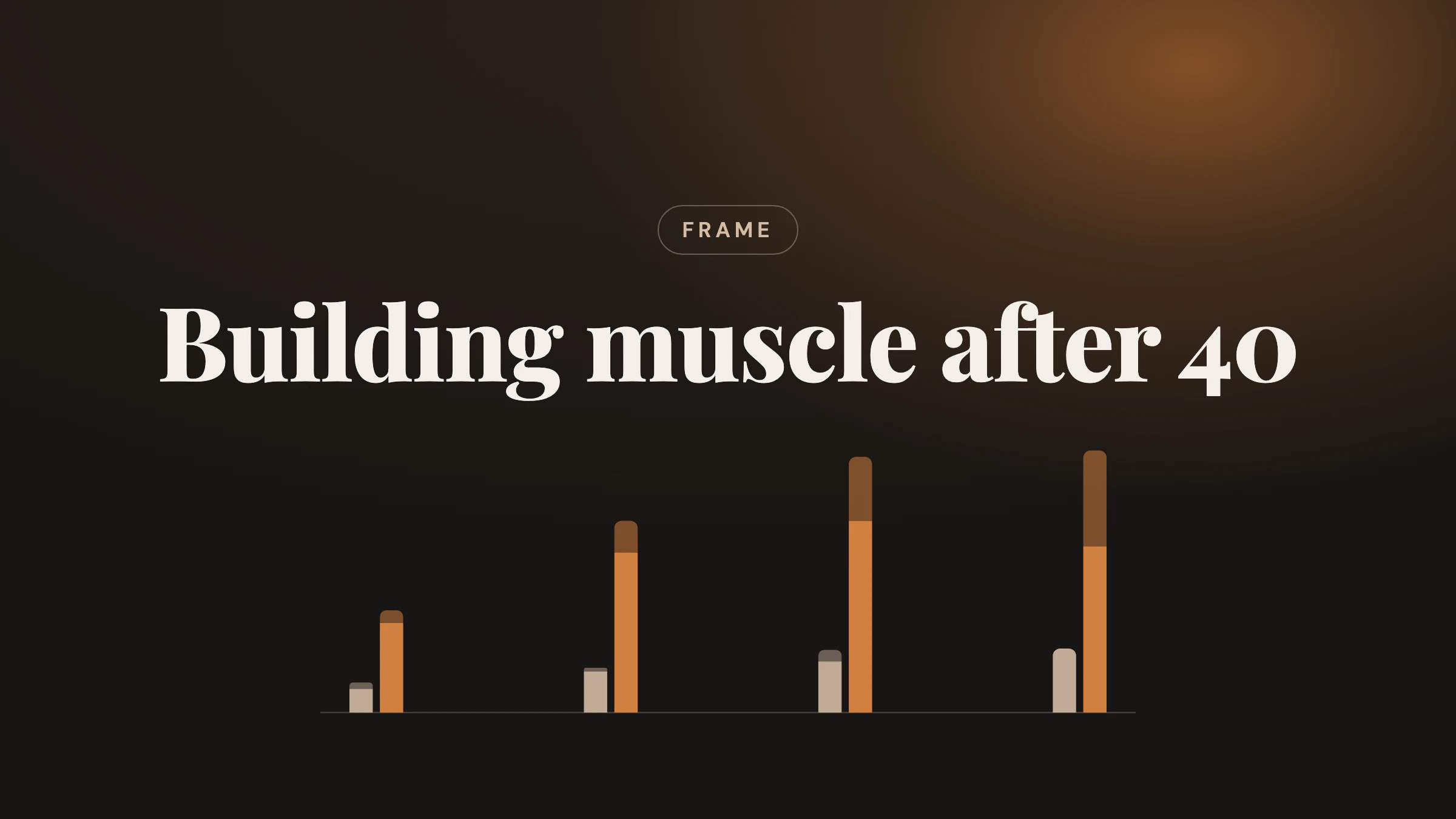
The gains shrink with age but remain. Across 49 studies of 1,328 adults aged 50 and older, lifting added a mean 1.1 kg of lean mass, more with higher-volume programs.
How long does body recomposition take, and how do you know it is working?
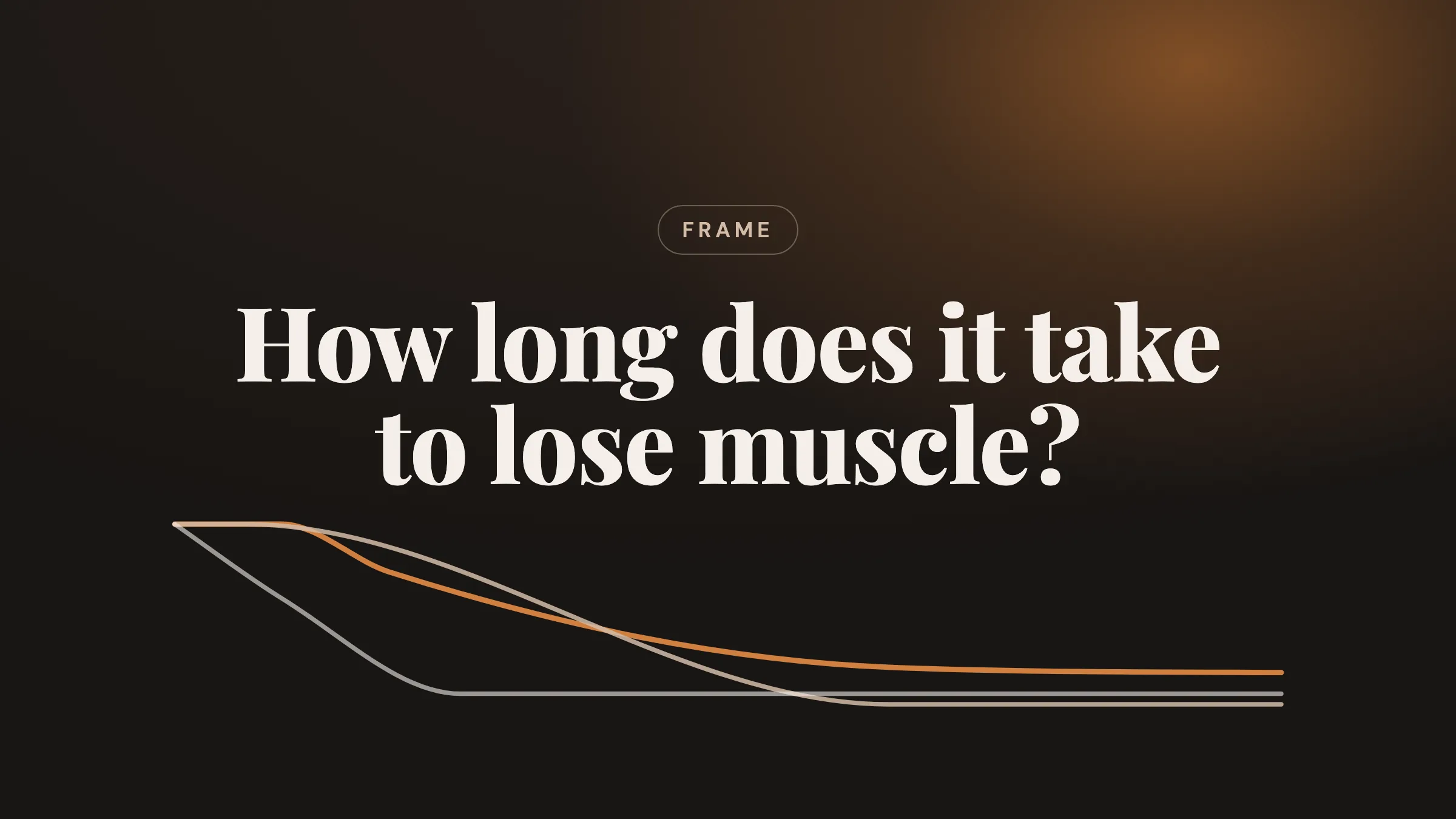
Expect the first measurable changes after about 8 to 12 weeks: in postmenopausal women, lean mass rose from week 8 and body fat percentage fell from week 12. In the 304-adult study, lifters averaged roughly 40 g of fat-free mass a week, not the 1 to 2 pounds of muscle some pages promise. The signs of gaining muscle and losing fat: a smaller waist, rising lifts, and a weekly weight average that falls slowly or holds.
Trust the tape over a bathroom body-fat scale. In 929 adults, a foot-to-foot bioimpedance scale missed body fat by 5.6 percentage points in men and 4.6 in women (typical error) against a DXA scan. In the 304-adult study, the men's abdominal circumference fell 9.0 cm with lifting and 6.1 cm without exercise, and the fall tracked fat loss closely (correlation 0.84). An international consensus statement calls a smaller waist a critically important treatment target.
Early fat-free gains can be mostly water: in the 12 adults aged 56 to 80, the 1.4 kg of fat-free mass came with 1.6 kg more body water. Our body fat calculator estimates body fat from a few tape measurements.
A 12-week plan
Our 12-week plan sets each lever inside the evidence: two or three full-body strength sessions a week on non-consecutive days, about 300 to 500 kcal a day below your needs, 1.2 to 1.6 g of protein per kg a day over three or four meals, a sleep window of at least 7 to 8 hours, and a check every two weeks of your waist at the navel, your weekly weight average and your top sets.
| Train | 2 or 3 full-body strength sessions a week on non-consecutive days; 2 to 3 sets of 6 to 12; stop 1 to 3 reps short of failure; add load when you beat the top of the range |
|---|---|
| Eat | About 300 to 500 kcal a day below your estimated needs; at maintenance if you are already lean and mainly want muscle |
| Protein | 1.2 to 1.6 g per kg a day over three or four meals, for example from eggs, dairy, fish, poultry, legumes or tofu |
| Sleep | A sleep window of at least 7 to 8 hours |
| Measure every 2 weeks | Waist at the navel in the morning, the weekly average of your weigh-ins, your top sets |
| Adjust | Lifts down two weeks in a row, or the weekly average falling faster than about 0.5 kg a week: eat a little more |
Each session covers a squat or leg press, a hip hinge such as a deadlift, a push, a pull and a carry. If your lifts fall two weeks in a row, or your weekly average drops faster than about 0.5 kg a week, eat a little more.
Our guide to building muscle after 40 lays out a two-day strength plan in full. If illness or travel costs you a week, our week-by-week guide shows how long it takes to lose muscle. Or let your huuman Coach plan every session into your week, with every set, rep and weight.
Common questions
Is it better to lose fat first, then build muscle?
Not if you lift: a calorie surplus is not required. In a study of 304 adults, the men who lifted gained fat-free mass about 500 kcal a day below their needs. Keep the deficit under that level, where lean-mass gains stopped on average, and eat at maintenance if you are already lean: lean athletes mostly lost fat-free mass in a deficit.
Can you lose fat and gain muscle and stay the same weight?
Yes. Twelve adults aged 56 to 80 whose diet held their weight steady lost 1.8 kg of fat and gained 1.4 kg of fat-free mass, mostly water, in 12 weeks of lifting, and postmenopausal women gained lean mass without changing body mass in 16 weeks.
Do you lose fat or muscle first?
Both, in a mix that lifting shifts. In an 18-month trial, dieters who lifted lost 7.8 kg of fat and 0.8 kg of lean mass, against 4.8 and 1.0 kg with weight loss alone: more fat for a similar lean loss. In a study of 304 adults, lifters lost more fat than weight.
Does fat turn into muscle?
No. In adults, the number of fat cells stays constant even after marked weight loss; fat mass shrinks as those cells store less, and muscle is a separate tissue. Lifting still cuts fat: in a review of 58 trials in healthy adults it cut fat mass by 0.55 kg against no exercise, visceral fat around the organs included.
Can women lose fat and gain muscle at the same time?
Yes. Women with a mean age of 68.7 who lifted raised muscle mass by 5.1 to 5.4 percent with moderate or higher protein intakes, and postmenopausal women gained lean mass from week 8 of training. Around the menopause transition, fat gain sped up and lean mass fell while weight rose steadily, so judge progress by waist and strength.
Does cardio help or hurt body recomposition?
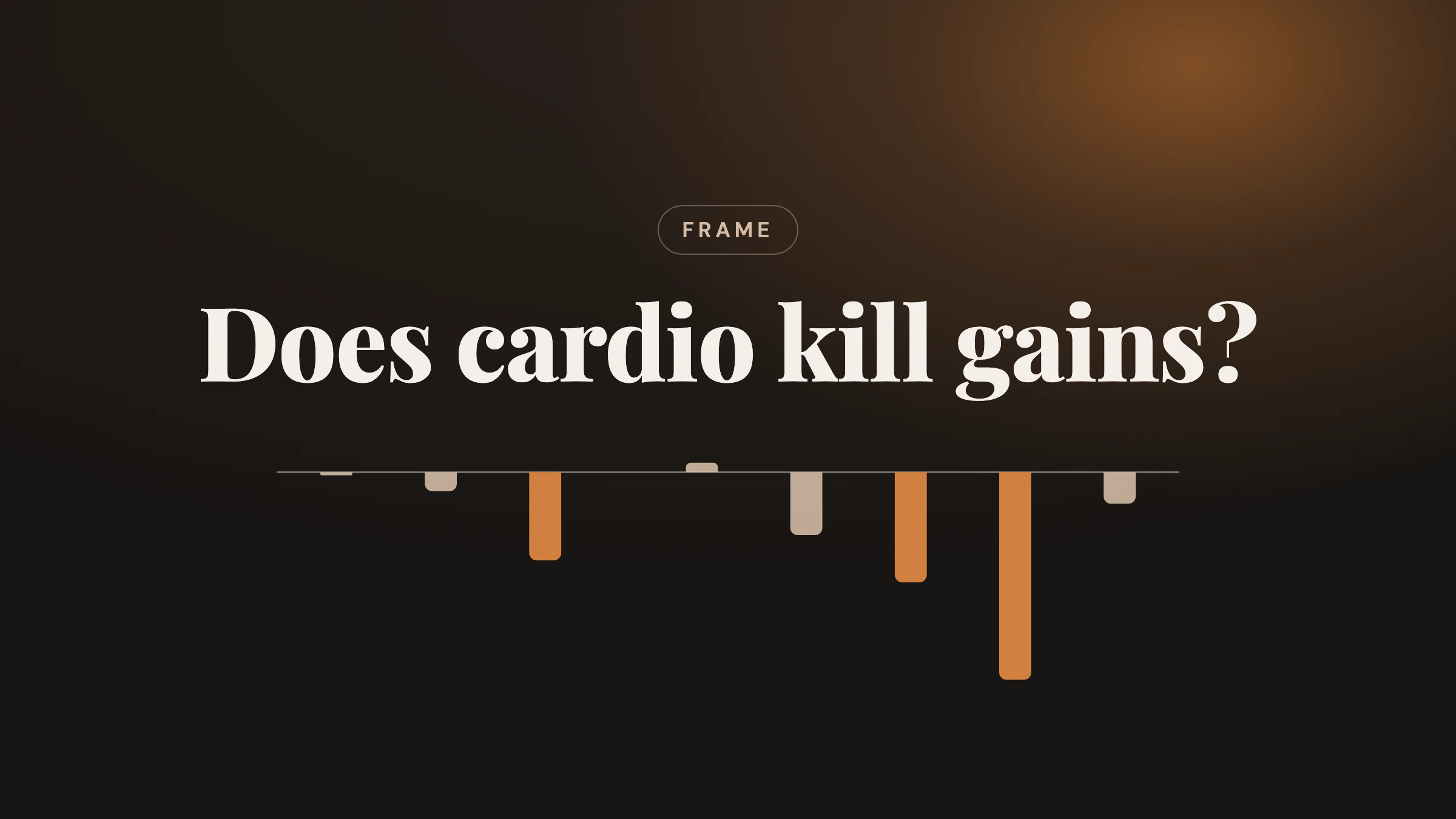
It helps, as long as lifting stays in. Over 8 months, aerobic training cut weight and fat more than lifting, but the programs with lifting added more lean mass; in dieting older adults with obesity, the combination improved physical performance most and lost 3 percent of lean mass, against 5 with aerobic training alone. Keep at least 2 strength sessions a week.
More health topics to explore
- Frame: strength and muscle guides
- Building muscle after 40: the full guide
- How long it takes to lose muscle, week by week
- Protein calculator
- Calorie deficit calculator
References
- Lahav Y et al. — Resistance training as a key strategy for high-quality weight loss in men... (2025)
- Sardeli AV et al. — Resistance Training Prevents Muscle Loss Induced by Caloric Restriction in... (2018)
- Lopez P et al. — Resistance training effectiveness on body composition and body weight... (2022)
- Helms ER et al. — A systematic review of dietary protein during caloric restriction in... (2014)
- Ribeiro AS et al. — Effects of resistance training on body recomposition, muscular strength, and... (2023)
- Longland TM et al. — Higher compared with lower dietary protein during an energy deficit combined... (2016)
- Campbell WW et al. — Increased energy requirements and changes in body composition with... (1994)
- Villareal DT et al. — Aerobic or Resistance Exercise, or Both, in Dieting Obese Older Adults (2017)
- Beavers KM et al. — Effect of Exercise Type During Intentional Weight Loss on Body Composition... (2017)
- Willis LH et al. — Effects of aerobic and/or resistance training on body mass and fat mass in... (2012)
- Currier BS et al. — American College of Sports Medicine Position Stand. Resistance Training... (2026)
- Murphy C et al. — Energy deficiency impairs resistance training gains in lean mass but not... (2022)
- Hall KD — What is the required energy deficit per unit weight loss? (2008)
- Bauer J et al. — Evidence-based recommendations for optimal dietary protein intake in older... (2013)
- Morton RW et al. — A systematic review, meta-analysis and meta-regression of the effect of... (2018)
- Kim JE et al. — Effects of dietary protein intake on body composition changes after weight... (2016)
- Wycherley TP et al. — Effects of energy-restricted high-protein, low-fat compared with... (2012)
- Verreijen AM et al. — A high whey protein-, leucine-, and vitamin D-enriched supplement preserves... (2015)
- Nedeltcheva AV et al. — Insufficient sleep undermines dietary efforts to reduce adiposity (2010)
- Wang X et al. — Influence of sleep restriction on weight loss outcomes associated with... (2018)
- Greendale GA et al. — Changes in body composition and weight during the menopause transition (2019)
- Pereira-Monteiro MR et al. — Functional and Combined Training Promote Body Recomposition and Lower Limb... (2024)
- Ribeiro AS et al. — Moderate and Higher Protein Intakes Promote Superior Body Recomposition in... (2022)
- Peterson MD et al. — Influence of resistance exercise on lean body mass in aging adults: a... (2011)
- Nana A et al. — Agreement of anthropometric and body composition measures predicted from 2D... (2022)
- Ross R et al. — Waist circumference as a vital sign in clinical practice: a Consensus... (2020)
- Spalding KL et al. — Dynamics of fat cell turnover in humans (2008)
- Wewege MA et al. — The Effect of Resistance Training in Healthy Adults on Body Fat Percentage,... (2022)
About this article · Written by the huuman Team. Our content is based on peer-reviewed research and clinical guidelines. We follow editorial standards grounded in scientific evidence.
This article is for educational purposes only and does not constitute medical advice. Health and training decisions should be discussed with qualified professionals.